

How Long Do Refurbished Servers Actually Last? Lifespan, Failure Rates and What Fails First
The question behind every refurbished purchase: how long before it fails? The answer comes from failure data on...

Our 3-2-1 backup guide covers the strategy: three copies, two media, one off-site. It doesn't cover the machine. And the machine matters, because a backup server is not a production server with the workload turned down. It has different priorities, a different storage layout, and in one important respect, opposite requirements depending on which backup software you run.
The good news is that those inverted priorities make a backup server one of the best uses of older refurbished hardware there is. Capacity matters more than clock speed. Sequential throughput matters more than random IOPS. A previous-generation chassis with a lot of drive bays does the job as well as anything current, at a fraction of the price.
This guide covers how backup workloads differ, what Veeam and Proxmox Backup Server each need from the hardware, how to size CPU, RAM, and storage, and three reference builds on refurbished Dell and HPE hardware.

A production server is optimised for fast random access to a working set of data. A backup server is optimised for swallowing large volumes of data sequentially during a nightly window, holding it safely for weeks or months, and reading it back in bulk during a restore. Almost every decision follows from that.
| Priority | Production Server | Backup Server |
|---|---|---|
| Storage metric | Random IOPS, low latency | Capacity and sequential throughput |
| Drive type | Enterprise SSD, NVMe | Large-capacity HDD, with SSD where the software needs it |
| RAID level | RAID 10 or mirrors | RAID 6 or RAIDZ2 for capacity with dual-drive tolerance |
| CPU | High clock, many cores for VMs | Moderate; enough to hash, compress, and deduplicate |
| Hardware generation | Current or recent | Previous generation is fine, often ideal |
| Chassis | 1U or 2U, SFF bays | 2U, as many LFF bays as possible |
RAID 6 rather than RAID 5 is not optional on a backup server. Backup pools are built from the largest drives available, rebuilds on 12TB and 16TB disks take a day or more, and a second failure during that window on a single-parity array loses the pool. Dual parity is the minimum for any array that exists to be the copy you fall back on.
This is the decision that has to be made before ordering the server, because it determines which RAID controller goes in it. The two most common backup platforms for small and mid-sized businesses have opposite storage preferences.
Veeam Backup & Replication
Wants a conventional block volume. Veeam's own guidance is hardware RAID with a battery or capacitor-backed write cache, presented as a local disk. That means a PERC H730P, H740P, or HPE Smart Array in RAID mode, configured as RAID 6 or RAID 60, formatted ReFS on Windows or XFS on Linux.
Proxmox Backup Server
Built around ZFS, which needs raw disk access. That means an HBA330 or a controller flipped to HBA/IT mode, no hardware RAID, and a RAIDZ2 pool. The ZFS datastore is what gives PBS its deduplication, checksumming, and snapshot features.
Putting ZFS on top of hardware RAID, or Veeam on a raw HBA with no cache, are both mistakes that produce a working but underperforming or fragile backup target. Our PERC guide and RAID versus ZFS comparison cover the reasoning; the practical point is to decide on the software first and specify the controller to match.
PBS is deceptively light on paper and genuinely demanding in practice, for one reason: deduplication. Every backup is split into chunks, hashed, and compared against an index of everything already stored. That index lives in RAM, and the chunk store on disk is accessed randomly rather than sequentially.
The special device is the detail most first-time PBS builders miss. A pool of large HDDs with no SSD metadata device will back up acceptably and then take days to verify or garbage-collect, which usually gets discovered after the pool is full. Two small enterprise SSDs added at build time prevent it. Our SSD endurance guide covers choosing them; mixed-use is appropriate here because metadata writes are constant.
Veeam separates the backup server (the management and job engine) from the repository (where backups land). On a small deployment they're the same machine, and it's the repository that drives hardware choice.
The mistake is sizing to the data you're protecting. A backup server holds multiple restore points, and the retention policy determines how many. The working rule:
Usable capacity = protected data × 2.5 to 3, for typical 30-day retention with weekly synthetic fulls and daily incrementals, after deduplication and compression. Protecting 10TB of VMs means planning 25 to 30TB usable. Longer retention or monthly archive points push the multiplier higher.
Then convert usable to raw. RAID 6 or RAIDZ2 across eight drives loses two to parity, so 30TB usable needs roughly 40TB raw, which is eight 6TB drives or six 8TB drives. Leave headroom: both ZFS and ReFS degrade badly above 80 percent full, and a backup pool that fills up stops backing up.
A nightly backup window has a fixed length. If the data doesn't fit through the network in that time, the job runs into production hours. On 1GbE, sustained throughput tops out around 100MB/s, which moves about 350GB an hour. Adequate for a handful of small VMs; not for a 10TB estate.
| Small (under 5TB protected) | Medium (5 to 20TB) | Large (20 to 60TB) | |
|---|---|---|---|
| Chassis | Dell R730 or HPE DL380 Gen9, 8 LFF | Dell R740xd or DL380 Gen10, 12 LFF | Dell R740xd2 or DL380 Gen10, 12 to 24 LFF |
| CPU | 1× Xeon, 8 cores | 1× Xeon Silver, 10 to 12 cores | 2× Xeon Silver/Gold, 16+ cores |
| RAM | 32GB ECC | 64GB ECC | 128GB ECC |
| Boot | 2× SSD mirror | BOSS, 2× M.2 mirror | BOSS, 2× M.2 mirror |
| Data drives | 6× 4TB SAS HDD | 10× 8TB SAS HDD | 12× 12TB to 16TB SAS HDD |
| Usable (RAID 6 / RAIDZ2) | ≈ 16TB | ≈ 64TB | ≈ 120 to 160TB |
| Controller for Veeam | H730P / P440ar, RAID 6 | H740P / P408i, RAID 6 | H740P / P816i, RAID 60 |
| Controller for PBS | HBA330, RAIDZ2 + 2× SSD special | HBA330, RAIDZ2 + 2× SSD special | HBA330, 2× RAIDZ2 vdevs + 2× SSD special |
| Network | 2× 1GbE | 2× 10GbE SFP+ | 2× 10GbE or 25GbE |
Notice the chassis column. Gen9 and 13th-generation hardware is entirely appropriate for a small backup target, and Gen10 or 14th-generation for anything larger. This is the role where a previous-generation server with a full complement of LFF bays beats a current 1U with SFF bays, at a fraction of the cost. As our lifespan guide notes, older hardware retired from production has years of useful life in exactly this job.
One backup server on-site satisfies two of the 3-2-1 rule's three requirements. The off-site copy is what survives fire, theft, flood, or ransomware that reaches the backup server. Three practical patterns for a business in Qatar:
At ServerDove Trading & Services, we build backup servers on refurbished Dell PowerEdge and HPE ProLiant LFF chassis with the correct controller for your platform, whether that's a PERC in RAID mode for Veeam or an HBA330 with an SSD special device for Proxmox Backup Server, plus enterprise SAS drives and 10GbE networking, delivered across Qatar with local warranty.
Yes, and it's one of the best uses for one. Backup workloads favour capacity and sequential throughput over clock speed, so a previous-generation 2U chassis with plenty of LFF drive bays is often better suited than a current 1U. Fit fresh drives, populate both PSU bays, and it will serve for years.
It depends on the software. Veeam wants hardware RAID with a battery-backed cache, presented as a block volume. Proxmox Backup Server is built on ZFS and needs an HBA with raw disk access. Decide the platform first, then specify the controller. Putting ZFS on hardware RAID or Veeam on a cacheless HBA both work badly.
4GB for the OS plus roughly 1GB per terabyte of datastore, before ZFS cache. A 40TB datastore wants around 44GB or more. RAM is the most commonly under-provisioned PBS resource, and under-provisioning makes verify and garbage collection jobs run for days.
For the boot drives, yes, a small mirrored pair. For PBS on hard drives, a mirrored pair of enterprise SSDs as a ZFS special device for metadata is strongly recommended. The bulk backup capacity itself is usually large-capacity SAS hard drives, since capacity per dirham matters more than IOPS in this role.
RAID 6 or RAIDZ2, without exception. Backup pools use the largest drives available, rebuilds on 12TB and larger disks take a day or more, and a second failure during that window on single-parity loses the array. Dual parity is the minimum for a pool whose whole purpose is to be the copy you fall back on.
ServerDove supplies refurbished Dell and HPE LFF chassis configured for Veeam or Proxmox Backup Server, with the correct controller, enterprise SAS drives, and networking, delivered in Doha and across Qatar with local warranty.
A backup server is the one machine whose job is to be boring for years and then perform perfectly on the worst day. That argues for a simple design: a previous-generation chassis with many drive bays, large SAS drives in dual-parity, the controller your software actually wants, enough RAM for deduplication if you're running PBS, and a network fast enough to restore through.
Decide the software first. Everything else, from the controller to the drive layout, follows from whether the target will run Veeam or Proxmox Backup Server.
Tell us how much data you're protecting, your retention policy, and which backup platform you run, and we'll size a backup server to suit, with delivery across Qatar and local warranty. Request a Quote · Chat on WhatsApp






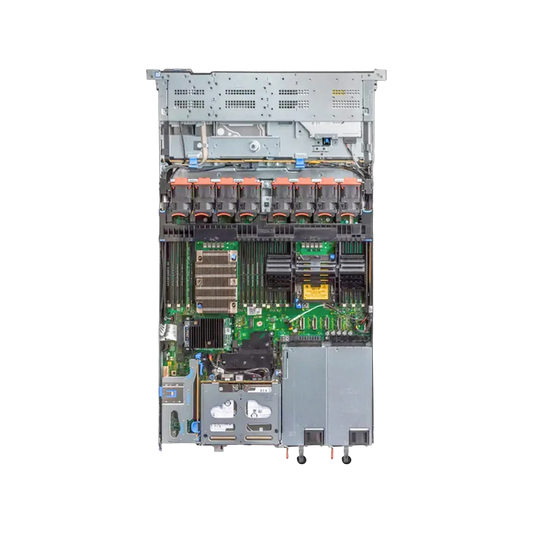

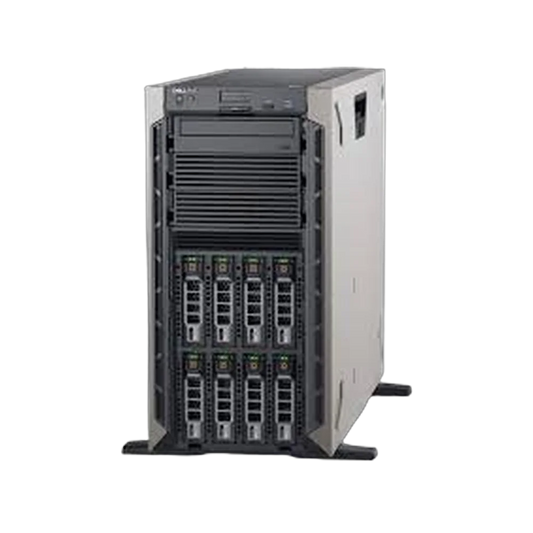


The question behind every refurbished purchase: how long before it fails? The answer comes from failure data on...
A rack has to outlast everything else in the server room. Buy a shallow one to save money...
"Use enterprise SSDs" is correct advice — and incomplete, because the category spans drives rated for a few...
"Refurbished" describes a process, not a guarantee. A properly refurbished server has been diagnosed, tested and verified component...


