

RAID Levels Explained: RAID 0, 1, 5, 6, 10, 50 and 60 for Business Servers
RAID levels appear in nearly every storage decision, usually as though everyone already knows why RAID 6 beats...

Transceivers are the single most returned item in networking, and almost always for the same reason: the module physically fitted the port, so it looked correct — but the wavelength, fibre type, or vendor coding didn't match, and the link never came up. A module that slots in cleanly can still be entirely wrong for your network.
The good news is that transceiver selection follows a small number of firm rules. Once you know how to read a part number, which fibre pairs with which module, and what your switch will actually accept, the choice becomes mechanical. This guide covers SFP through QSFP, single-mode versus multi-mode, DAC cables, vendor compatibility, and the practical considerations for fibre runs in Qatar.

An SFP (Small Form-factor Pluggable) transceiver is a hot-swappable module that slots into a switch, router, or server NIC and converts electrical signals into light — and back again at the far end. It's the interface between your switch and a fibre optic cable.
The reason switches use pluggable modules rather than fixed fibre ports is flexibility: the same physical port can run a short 300-metre multi-mode link today and a 10km single-mode link tomorrow, just by swapping the module. That's why the uplink ports on business switches are almost always SFP cages rather than fixed connectors.
These names describe the module's form factor and speed generation — not its reach. They look nearly identical, which is exactly why mistakes happen.
| Form Factor | Speed | Lanes | Typical Use |
|---|---|---|---|
| SFP | 1G | 1 | Legacy uplinks, building-to-building links on older networks |
| SFP+ | 10G | 1 | The current business standard for switch uplinks and server NICs |
| SFP28 | 25G | 1 | Ceph/storage networks, higher-throughput server connections |
| QSFP+ | 40G | 4 | Core/aggregation links, or broken out into 4× 10G |
| QSFP28 | 100G | 4 | Data centre core, high-density aggregation |
The difference between the SFP family and the QSFP family is lane count: SFP modules use one electrical lane, QSFP modules combine four. That's why a QSFP+ port can often be "broken out" into four separate 10G links with the right cable — useful for connecting four servers to one high-speed switch port.
Speed does not imply distance. A 10G SFP+ LR module reaches 10km over single-mode fibre; a 100G QSFP28 SR4 module is designed for short runs of a hundred metres or so. Faster is not further — reach is set by the module's optics, not its speed rating.
This is the decision that determines everything else, and it's set by distance and by whatever fibre is already in the ground.
Multi-Mode (MMF)
Wider core, 850nm wavelength, cheaper optics. Typically OM3 (aqua) or OM4 (violet) cable. Practical reach in the hundreds of metres — within a building, between floors, inside a data centre.
Single-Mode (SMF)
Narrow core, 1310nm or 1550nm wavelength, more expensive optics. OS2 (yellow) cable. Reaches 10km, 40km, or 80km depending on module — the choice for building-to-building and campus links.
The module must match the fibre. A multi-mode module on single-mode fibre generally won't work reliably, and while a single-mode module can sometimes drive multi-mode fibre over very short distances, it isn't a supported configuration and shouldn't be designed in. Check what fibre is already installed before ordering modules — retrofitting the wrong type into an existing run is expensive.
Quick identification: fibre jacket colour is a reliable first indicator — aqua and violet are multi-mode (OM3/OM4), yellow is single-mode (OS2). Module bail latch colour also follows convention on many brands, though it's less consistent than the cable.
Once you can decode the suffix, most of the guesswork disappears. Take SFP-10G-LR: SFP+ form factor, 10 gigabit, Long Range. The reach code is the part that matters most:
| Code | Meaning | Fibre | Typical Reach |
|---|---|---|---|
| SX | Short (1G) | Multi-mode | Up to ~550m |
| SR | Short Range | Multi-mode | ~300m (OM3) / ~400m (OM4) |
| LX / LR | Long Range | Single-mode | Up to 10km |
| ER | Extended Range | Single-mode | Up to 40km |
| ZR | Extra long haul | Single-mode | Up to 80km |
| T | Copper (RJ45) | Cat6/6a | Up to 100m |
Suffixes ending in 4 — like QSFP-40G-SR4 — indicate a four-lane module, which usually means an MPO/MTP connector rather than the standard duplex LC, and often supports breakout into 4× 10G.
Not every SFP port needs fibre. Two alternatives are often cheaper and simpler:
For same-rack connections, DAC is almost always the right answer: cheaper than two modules plus a patch lead, and one less thing to fail. Reserve optical modules for links that actually leave the rack.
This is where most transceiver purchases go wrong. Every module carries an EEPROM chip identifying its manufacturer, and many switches check that chip before enabling the port. A technically perfect module from the wrong vendor may simply be rejected.
Third-party modules are coded at manufacture to identify as a specific brand — so a compatible module ordered for a Cisco switch reports itself as Cisco, and the switch accepts it. This works reliably, and the SFP Multi-Source Agreement means the underlying optics are standardised across vendors. Two practical points:
service unsupported-transceiver, for instance — but this can affect support entitlement, so check before relying on it
Two local factors come up repeatedly on Qatari deployments.
Fibre is the only sensible option for links between separate buildings — a villa compound, a warehouse and its office block, a multi-building facility in the Industrial Area. Beyond the 100-metre copper limit, single-mode fibre with LR modules handles the distance comfortably, and fibre carries no electrical path between buildings, which removes a genuine surge and earthing risk in outdoor runs.
Standard commercial transceivers are typically rated for 0–70°C. In an air-conditioned rack that's ample, but in an outdoor cabinet or unventilated comms cupboard during a Doha summer, module temperature can climb well beyond ambient — transceivers generate their own heat, particularly copper SFPs and higher-speed optics. For outdoor or unconditioned enclosures, specify industrial or extended-temperature modules rated to 85°C. Our Qatar server room cooling guide covers the wider thermal picture.
Confirm all six before ordering — skipping any one of these is how modules end up returned:
At ServerDove Trading & Services, we supply coded transceivers and DAC cables for Cisco, Aruba, HPE, and other major platforms, tested before dispatch and delivered across Doha and Qatar. Send us your switch models and link distances and we'll confirm the correct modules before you order. Browse SFP modules & transceivers, network cables, or the full networking range.
SFP handles 1 gigabit; SFP+ handles 10 gigabit. They share the same physical form factor, so an SFP module usually fits in an SFP+ port and runs at 1G — but an SFP+ module will not work in a 1G-only SFP port. Check the port specification, not the physical fit.
It sometimes links over very short distances, but it isn't a supported configuration and shouldn't be designed into a network. Match the module to the fibre already installed — single-mode modules with OS2, multi-mode modules with OM3 or OM4.
Yes, when correctly coded for that platform. Compatible modules are programmed at manufacture to identify as the host vendor, so the switch accepts them. Always specify your exact switch brand and model when ordering so the coding matches.
For links within the same rack, up to about 7 metres. A DAC cable is cheaper than two modules plus a fibre patch lead, uses less power, and has fewer failure points. Use optical transceivers for anything leaving the rack.
No. Reach is determined by the module's optics and the fibre type, not its speed. A 10G LR module reaches 10km over single-mode fibre, while a 100G SR4 module is designed for short multi-mode runs of around 100 metres.
ServerDove supplies coded SFP, SFP+, SFP28, and QSFP transceivers and DAC cables for Cisco, Aruba, HPE, and other platforms across Qatar, with delivery in Doha and nationwide. Modules are tested before dispatch and covered by local warranty.
Transceivers reward a few minutes of checking far more than most hardware purchases. Confirm the port type, match the module to the fibre already in the ground, measure the actual route distance, and specify the switch platform for correct coding — get those four right and the link comes up first time.
And remember the two rules that catch people out most often: a module fitting the cage doesn't mean the switch supports it, and faster doesn't mean further.
Not sure which module your link needs? Send us your switch models, fibre type, and distance and we'll confirm the right transceivers before you buy — with delivery across Qatar and local warranty support. Request a Quote · Chat on WhatsApp

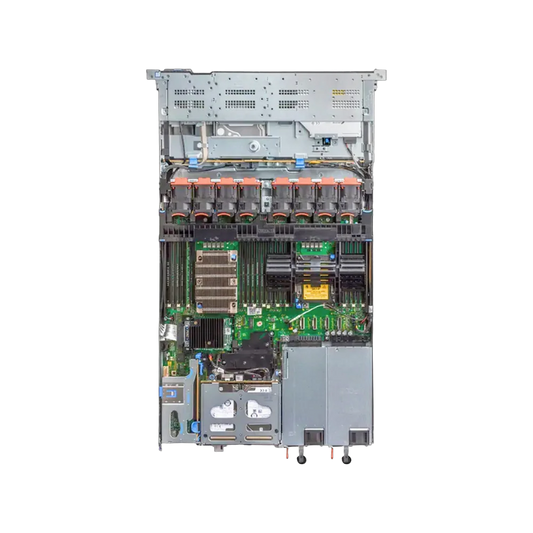


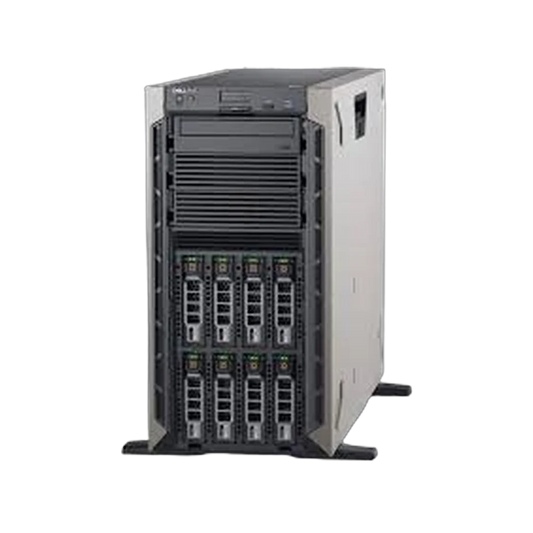






RAID levels appear in nearly every storage decision, usually as though everyone already knows why RAID 6 beats...
A backup server isn't a production server with the workload turned down. It has inverted priorities, and Veeam...
The question behind every refurbished purchase: how long before it fails? The answer comes from failure data on...
A rack has to outlast everything else in the server room. Buy a shallow one to save money...


