

RAID Levels Explained: RAID 0, 1, 5, 6, 10, 50 and 60 for Business Servers
RAID levels appear in nearly every storage decision, usually as though everyone already knows why RAID 6 beats...

Most small businesses believe they have backups - until the day they need to restore. A drive fails, an employee deletes the wrong folder, or ransomware encrypts the file server, and suddenly the "backup" turns out to be a copy on the same machine, or an external drive that stopped syncing eight months ago.

Data loss is rarely caused by a lack of backup software. It is caused by a lack of backup strategy. The 3-2-1 rule is the simplest, most proven strategy in the industry, and it can be implemented affordably with Veeam and a NAS built on enterprise server hardware.
This guide explains the 3-2-1 rule, how to implement it with Veeam and a NAS, and how to make sure ransomware cannot destroy your backups along with your data.
The threats to business data are broader than most people expect:
A single copy of your data - no matter how good the hardware - is a single point of failure. The 3-2-1 rule exists to remove every single point of failure.
The 3-2-1 rule is a simple standard used by IT professionals worldwide:
3 - Three Copies
Keep at least three copies of your data: the production data itself plus two backups.
2 - Two Different Media
Store the copies on at least two different storage systems, so one type of failure cannot destroy both.
1 - One Copy Offsite
Keep at least one copy in a different physical location - another office, branch, or the cloud.
A practical example for a small business:
Production Server → Backup to NAS (onsite) → Copy to Second NAS or Cloud (offsite)
Three copies, two systems, one offsite - no single event can destroy all of them.
Many professionals now extend this to 3-2-1-1-0: one additional copy that is offline or immutable (cannot be modified), and zero errors verified by regularly testing restores. Both additions are aimed directly at ransomware, which we cover below.
The onsite backup copy needs to be fast to back up to and fast to restore from - when a server goes down, restore speed decides how long the business is offline. This is where a dedicated NAS earns its place: large capacity, RAID protection, and gigabit or 10GbE restore speeds that no cloud connection can match.
A NAS built on a refurbished enterprise server - for example running TrueNAS on Dell PowerEdge or HPE ProLiant hardware - adds advantages that consumer NAS boxes lack:

Veeam Backup & Replication is one of the most widely used backup platforms for small and medium businesses. It backs up physical servers, workstations, and virtual machines (VMware, Hyper-V, Proxmox), and works naturally with a NAS as its backup repository.
A typical small business deployment looks like this:
Servers & VMs → Veeam Backup Server → NAS Repository (onsite) → Backup Copy Job → Offsite NAS / Cloud
Veeam handles scheduling, compression, deduplication, encryption, and verification automatically.
Size the backup NAS at roughly 2–3× the production data volume. Compression and deduplication help, but retention history grows - a business with 4 TB of data should plan for a NAS with at least 10–12 TB usable.
Modern ransomware does not just encrypt your files — it actively looks for backup servers, network shares, and repositories and destroys them first, so you have no choice but to pay. A backup that sits on an open network share with the same admin credentials as everything else is not protection.
Practical defenses, in order of importance:
The combination of Veeam + NAS snapshots + one offsite copy means a ransomware attack becomes a bad day instead of a business-ending event.
| Business Size | Onsite Backup (Copy 2) | Offsite Copy (Copy 3) | Suggested Hardware |
|---|---|---|---|
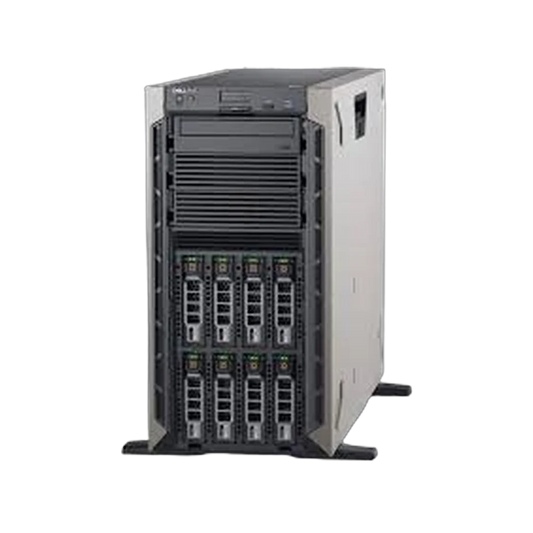
| Small (1–2 servers, <2 TB) | NAS with 4x 4TB, RAID 5/Z1 | Cloud storage or rotated encrypted USB drives | Dell PowerEdge T340 / tower NAS build |
| Medium (3–10 servers/VMs, 2–10 TB) | TrueNAS server, 6–8x 8TB, RAIDZ2, snapshots | Second NAS at another branch, replication | Dell PowerEdge R730xd / HPE DL380 Gen9 |
| Growing (10+ VMs, 10 TB+) | Dedicated Veeam repository server, 10GbE, immutable storage | Second TrueNAS site + cloud archive tier | Dell PowerEdge R740xd / HPE DL380 Gen10 |
Refurbished enterprise servers are especially cost-effective as backup targets: backup workloads need capacity, drive bays, and reliability — not the newest CPUs — so previous-generation hardware delivers the same result at a fraction of the price.
The 3-2-1 rule works because it is simple: three copies, two systems, one offsite. Veeam automates the process, and a NAS built on enterprise server hardware provides the fast, protected, expandable repository that makes the strategy practical for a small business budget - especially when the offsite copy is a second NAS with snapshots and replication.
The best time to build a proper backup system is before you need it. The second-best time is today.
At ServerDove Trading & Services, we supply refurbished and new enterprise servers, high-capacity drives, RAID/HBA cards, and 10GbE networking — everything needed to build Veeam backup repositories and TrueNAS backup servers in Qatar. Contact us to size a backup solution for your data volume and retention needs.









RAID levels appear in nearly every storage decision, usually as though everyone already knows why RAID 6 beats...
A backup server isn't a production server with the workload turned down. It has inverted priorities, and Veeam...
The question behind every refurbished purchase: how long before it fails? The answer comes from failure data on...
A rack has to outlast everything else in the server room. Buy a shallow one to save money...


