

Backup Server Build Guide: Hardware for Veeam and Proxmox Backup Server
A backup server isn't a production server with the workload turned down. It has inverted priorities, and Veeam...

Every business with a chatbot subscription, a document-processing tool, or a team quietly pasting confidential data into ChatGPT is already paying for AI - just per token, indefinitely, with their data leaving the building. A growing number are asking the obvious follow-up question: can we just run this ourselves?
The answer, for most small and mid-sized businesses, is yes - and refurbished enterprise hardware is one of the most cost-effective ways to get there. A GPU-equipped Dell PowerEdge or HPE ProLiant server can run modern open-source language models, document automation, and image generation entirely on-premises, with no per-token bill and no data ever leaving your network.
This guide covers what on-prem AI actually requires, which refurbished servers can carry a GPU, which cards are realistic choices, and how the economics compare to paying for cloud AI every month.

Cloud AI subscriptions and API bills add up quietly. A busy team of ten can easily run several hundred dollars a month across ChatGPT, Claude, and various AI-powered tools - and that number only grows as usage does. Running an open-source model on your own hardware turns that recurring cost into a one-time hardware purchase.
Cost is only part of the picture. The other driver is control:
On-prem isn't an all-or-nothing decision. Many businesses run day-to-day inference locally and burst to a cloud API only for the occasional heavy job - getting most of the cost savings without needing to size hardware for rare peak demand.
Yes — with the right expectations. A refurbished server isn't going to train a frontier model, and it's not competing with a fresh H100 cluster. But that's not what most businesses actually need. The workload that matters for the vast majority of small and mid-sized businesses is inference - running an already-trained model to answer questions, summarize documents, or generate a response - not training one from scratch.
Inference is far less demanding than training, and modern open-source models (Llama, Mistral, Qwen, DeepSeek, and others) run comfortably on a single professional-grade GPU. That GPU is the one part of this build you'll buy new or lightly used - but the server carrying it, the RAM, the drives, the chassis, the redundant power supplies, all of that is exactly where a refurbished PowerEdge or ProLiant earns its keep, at a fraction of new-server pricing.
Think of it as splitting the budget: spend where it matters (the GPU and enough RAM) and save everywhere else (a proven, refurbished 2U chassis with server-grade reliability and remote management already built in).
Not every rack server can take a GPU. Before shopping for a card, the chassis needs to check a few boxes:
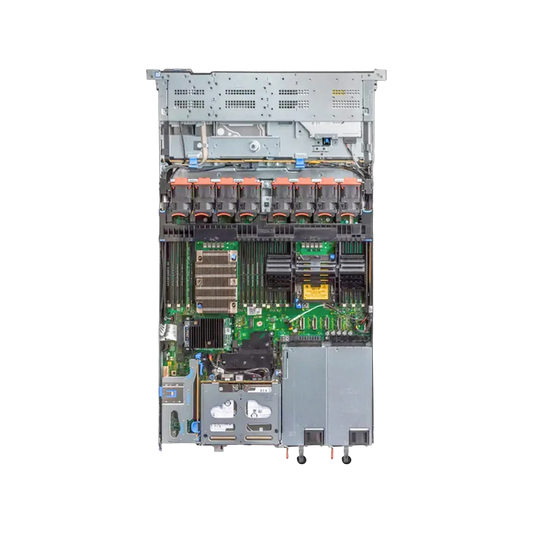
GPU support isn't universal across the PowerEdge and ProLiant ranges - it depends on the chassis having the right riser slot, airflow design, and power delivery. These are the models worth targeting on the refurbished market:
| Server | GPU Capacity | Notes |
|---|---|---|
| Dell PowerEdge R740 / R740xd | Up to 3 double-wide GPUs | The most common refurbished GPU host; needs the GPU enablement kit, correct riser, and 1100W+ PSUs |
| Dell PowerEdge R750 / R750xa | Up to 4 double-wide GPUs (R750xa) | R750xa is purpose-built for accelerators; standard R750 supports fewer, smaller cards |
| HPE ProLiant DL380 Gen10 / Gen10 Plus | Up to 3 GPUs depending on config | Popular HPE choice; confirm the GPU-ready riser and high-performance fan option are included |
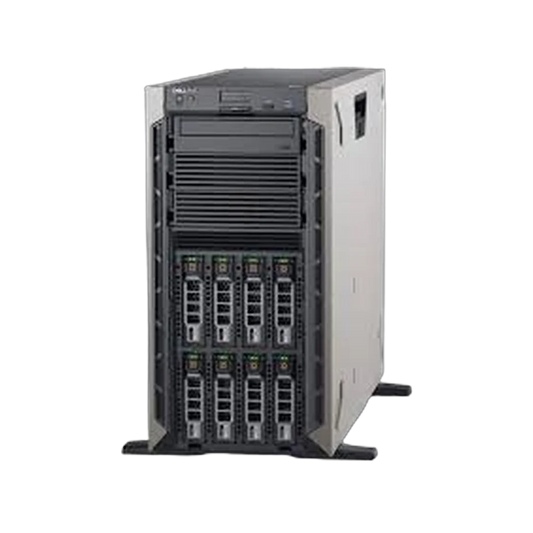
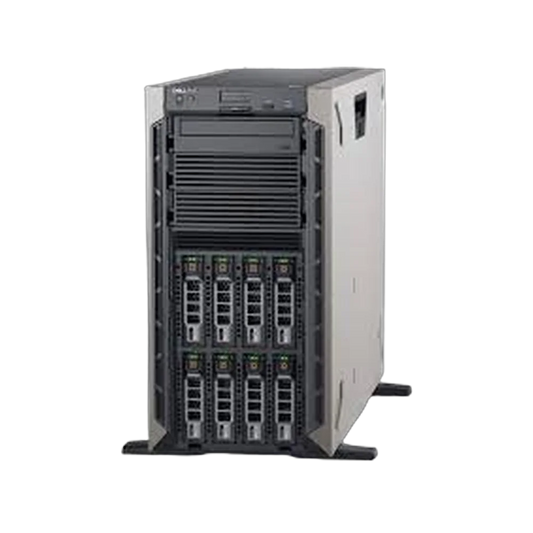
| Dell PowerEdge T440 / T640 (tower) | 1–2 GPUs | Good option for an office without a rack — quieter, but less GPU headroom |
Always confirm the specific GPU model against the server's official support list before buying - Dell and HPE publish exact compatibility lists, and running an unsupported card (especially consumer GeForce/Radeon cards, which are longer than most server riser cages) can mean cooling, power, or physical fit problems. When in doubt, ask us to confirm compatibility before you order.
The GPU market splits cleanly into two categories for this purpose, and the right one depends on your budget and how "production" the deployment needs to be:
Data-Center Cards (NVIDIA A2, A10, A16, A30, A40, A100)
Officially supported in Dell/HPE compatibility lists, passively cooled by chassis airflow, built for 24/7 rack use. The safe, supported choice for a business deployment.
Consumer / Prosumer Cards (RTX 4090, RTX A4000/A5000)
Much cheaper per GB of VRAM and popular in the homelab community, but actively cooled, longer than server risers expect, and rarely on official support lists - workable, but unsupported.
VRAM is the number that decides which models you can actually run - it's the single biggest sizing factor, more important than raw GPU speed. As a rough guide for quantized (compressed) open-source models:
| Model Size | Typical VRAM Needed (quantized) | Example Use Case |
|---|---|---|
| 7–8B parameters | 8–12GB | Chat assistant, drafting, simple document Q&A for a small team |
| 13–34B parameters | 16–24GB | Higher-quality reasoning, coding assistance, RAG over company documents |
| 70B parameters | 40–48GB (or multi-GPU) | Production-grade team AI server, more demanding workloads |
For most SMB use cases - an internal chat assistant, document summarization, customer support drafting - a single 16–24GB data-center card in a refurbished R740 or DL380 is enough. Save the multi-GPU builds for when you actually have a proven, heavy workload.
If you're already running Proxmox - including on a server migrated over in our VMware-to-Proxmox guide - adding a GPU host to the cluster is straightforward. Proxmox supports full GPU passthrough: the GPU is handed directly to one VM via VFIO, giving that VM near-native GPU performance, isolated from the rest of the cluster.
The practical setup, at a glance:
Standard passthrough dedicates the GPU to one VM at a time - fine for a single AI host. If you need to share one GPU across multiple VMs, that requires NVIDIA vGPU, which needs a vGPU-licensed data-center card and additional licensing, and is a bigger project than most SMB deployments need.
The hardware is only half the project. On the software side, two tools cover almost every SMB use case:
On top of either, a front end like Open WebUI gives your team a familiar chat interface, and both tools support retrieval-augmented generation (RAG) - feeding the model your own company documents so answers are grounded in your actual policies, contracts, or knowledge base rather than the model's general training.
The break-even point depends entirely on usage. Cloud AI API pricing is per-token, so cost scales directly with volume - a good fit for occasional or unpredictable use. Owned hardware has a fixed cost regardless of how hard it works, which is what makes it attractive for steady, day-to-day usage.
| Cloud AI APIs | On-Prem GPU Server | |
|---|---|---|
| Cost structure | Per-token, scales with usage | One-time hardware cost, then largely fixed |
| Data | Leaves your network to a third party | Never leaves your premises |
| Best fit | Light, unpredictable, or occasional use | Steady daily use by a team, sensitive data |
| Scaling | Instant, no hardware planning needed | Requires buying more GPU/hardware headroom upfront |
A useful rule of thumb from the industry: once GPU utilization is consistently above roughly 20%, owned hardware tends to break even against cloud API pricing within 6–12 months. Below that, for occasional or spiky workloads, cloud is usually still cheaper — which is exactly why a hybrid approach (local for daily use, cloud for occasional bursts) works well for a lot of SMBs.
| Setup | Configuration | Good For |
|---|---|---|
| Starter team AI host | Refurbished R740, 1x 16–24GB data-center GPU, 128GB RAM, NVMe boot/model storage | Internal chat assistant, document Q&A, drafting for a team of 5–20 |
| Growing business host | Refurbished R750xa / DL380 Gen10 Plus, 1–2x 40GB+ GPUs, 256GB RAM | Larger models, more concurrent users, production RAG pipelines |
Physically, sometimes - but it's rarely a clean fit. Consumer cards are actively cooled, often too long for a server's riser cage, and not on Dell or HPE's official compatibility lists. It can work in a homelab setting, but for a business deployment a supported data-center card is the safer, more predictable choice.
Not for most SMB use cases. A single 16–24GB data-center GPU comfortably handles the 7B–34B parameter models that cover the majority of business AI tasks. Multi-GPU builds are for larger models or many concurrent users - worth adding once you have a proven need, not before.
Yes. A GPU server can be one more node in an existing Proxmox or VMware environment, with the GPU passed through to a dedicated VM while the rest of the cluster keeps running normally.
Rarely, and it's usually unnecessary. Fine-tuning a small model on your own data is sometimes feasible on a single strong GPU, but training a model from scratch needs hardware far beyond this scale. Almost all SMB value comes from inference on an existing open-source model - not training a new one.
On-prem AI has gone from experimental to mainstream faster than almost anyone predicted. For a business already paying steadily for cloud AI tools, a GPU-equipped refurbished server offers a straightforward way to bring that cost in-house — while keeping sensitive data on-premises the whole time.
The formula: a refurbished R740, R750xa, or DL380 with a GPU-enablement kit, one supported data-center GPU sized to your models, enough RAM, and NVMe storage - running Ollama or vLLM, standalone or as a passthrough VM inside an existing Proxmox cluster.
At ServerDove Trading & Services, we supply GPU-ready refurbished Dell PowerEdge and HPE ProLiant servers in Qatar - configured with the correct riser, enablement kit, power supplies, and cooling for your GPU of choice, plus compatible data-center GPUs, RAM, and NVMe storage. Contact us and we'll help size a GPU host to your AI workload.

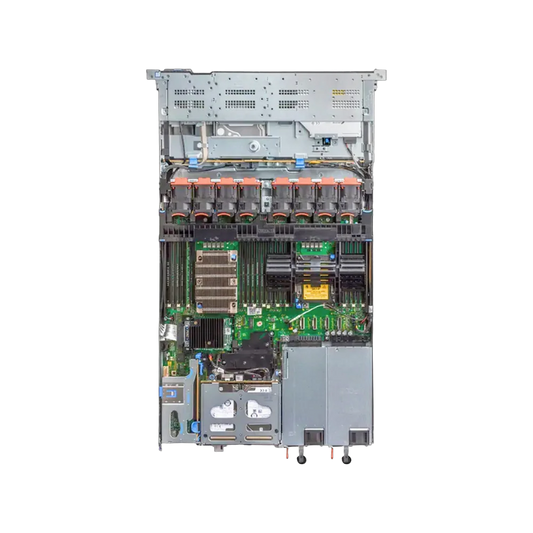




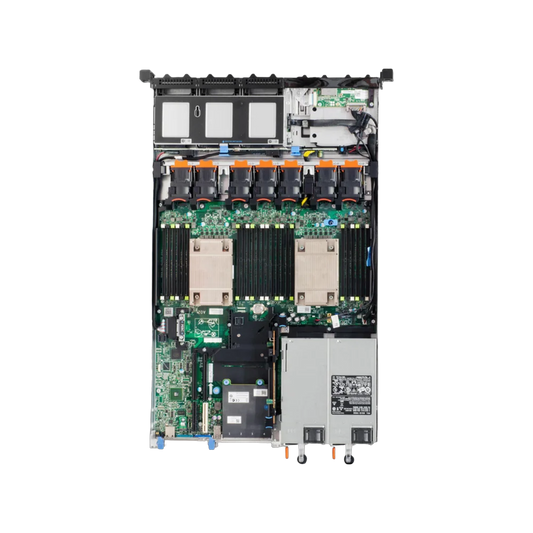




A backup server isn't a production server with the workload turned down. It has inverted priorities, and Veeam...
The question behind every refurbished purchase: how long before it fails? The answer comes from failure data on...
A rack has to outlast everything else in the server room. Buy a shallow one to save money...
"Use enterprise SSDs" is correct advice — and incomplete, because the category spans drives rated for a few...


