

Enterprise SSD Endurance Explained: DWPD, TBW, and Choosing the Right Drive
"Use enterprise SSDs" is correct advice — and incomplete, because the category spans drives rated for a few...

If your latest VMware renewal quote made you spill your coffee, you're not alone. Since Broadcom's acquisition of VMware, perpetual licenses are gone, entry-level editions have been discontinued, subscriptions come in large mandatory bundles, and minimum core requirements have jumped dramatically. Many small and mid-sized businesses have seen costs multiply several times over — for what is essentially the same product they already had.
The good news: for most SMB workloads, you no longer need VMware. Proxmox VE running on refurbished Dell PowerEdge or HPE ProLiant hardware delivers the same core capabilities — VMs, clustering, high availability, live migration, and software-defined storage — at a fraction of the cost. In many cases, an entire hardware refresh costs less than a single year of the new VMware subscription.
This guide covers why businesses are leaving VMware in 2026, how Proxmox features map to what you use today, which refurbished servers make the best migration targets, and a practical step-by-step migration plan.

Here's a quick summary of what has changed under Broadcom, and why the math no longer works for a typical business running 2–4 hosts:
| Change | What It Means for You |
|---|---|
| Perpetual licenses eliminated | No more "buy once, run for years" — everything is now an annual or multi-year subscription |
| Entry-level editions discontinued | The Essentials kits that small businesses relied on are gone |
| 72-core minimum purchase | Even a small 2-node cluster with 32 cores must be licensed for 72 cores |
| Forced bundles | Around 168 product SKUs consolidated into a handful of large bundles — you pay for features you may never use |
| 20% late-renewal penalty | Miss your renewal anniversary and a retroactive 20% surcharge is added |
| Shrinking partner network | Regional resellers and smaller cloud providers have been squeezed out, reducing buying options and negotiation leverage |
Customers across the industry have reported subscription costs several times higher than their previous licensing — with smaller deployments hit hardest by the core minimums. For an SMB, that's enterprise-tier pricing on a small-business footprint.
Proxmox Virtual Environment is an open-source virtualization platform built on Debian Linux. It runs full KVM virtual machines (Windows Server, Linux — anything ESXi could run) plus lightweight LXC containers, all managed from a built-in web interface with no separate vCenter server required.
We covered the platform in depth in our guide to Proxmox virtualization on refurbished servers. What matters for VMware migrators is how directly the features map across:
| VMware Feature | Proxmox Equivalent |
|---|---|
| ESXi hypervisor | Proxmox VE (KVM) |
| vCenter | Built-in cluster management from any node's web UI |
| vMotion | Live migration (included free) |
| vSphere HA | Proxmox HA Manager (included free) |
| vSAN | Ceph (hyper-converged) or ZFS + replication |
| VMware snapshots | QEMU / ZFS snapshots |
| Veeam backups | Proxmox Backup Server — and Veeam now supports Proxmox too |
| VMFS datastores | ZFS, LVM-thin, Ceph, NFS, iSCSI |
| VMware Tools | QEMU Guest Agent + VirtIO drivers |
Proxmox VE is completely free, including clustering, HA, and live migration. Optional subscriptions add the enterprise update repository and vendor support — with no core minimums and no forced bundles.
The honest gaps: if you depend heavily on NSX-level network virtualization, deep Aria/vRealize automation, or third-party integrations certified only for vSphere, evaluate carefully first. For the vast majority of SMB workloads — Windows and Linux VMs, file servers, databases, domain controllers, RDS — Proxmox is a complete replacement.
Moving off VMware is also the perfect moment to rethink your hardware spend — because Proxmox flips the hardware economics on their head:
These platforms offer the best balance of price, core count, RAM capacity, and storage flexibility for Proxmox migration clusters:
| Server | Form Factor | Best For |
|---|---|---|
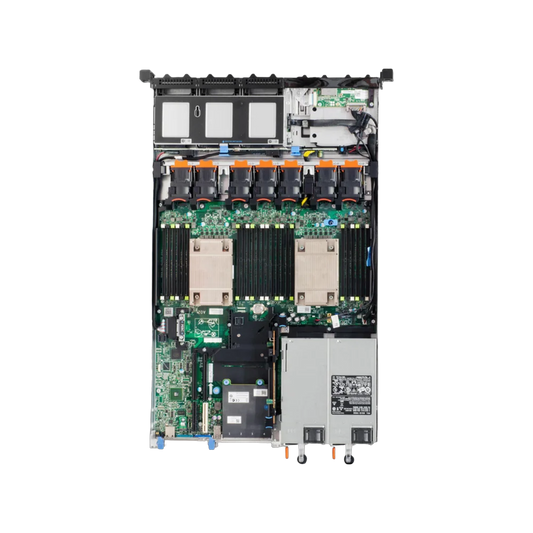
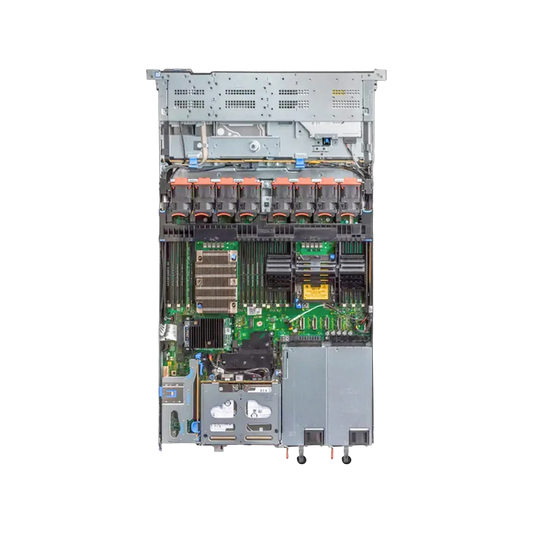
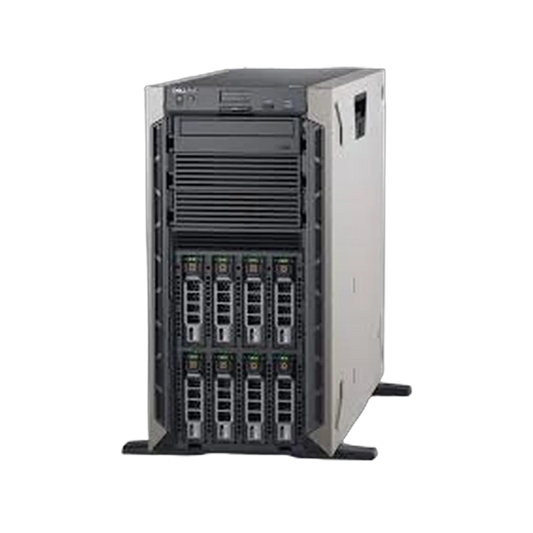
| Dell PowerEdge R640 | 1U, up to 3TB RAM, 10x 2.5" bays with NVMe options | General-purpose VM hosts and 3-node HA clusters — the all-rounder |
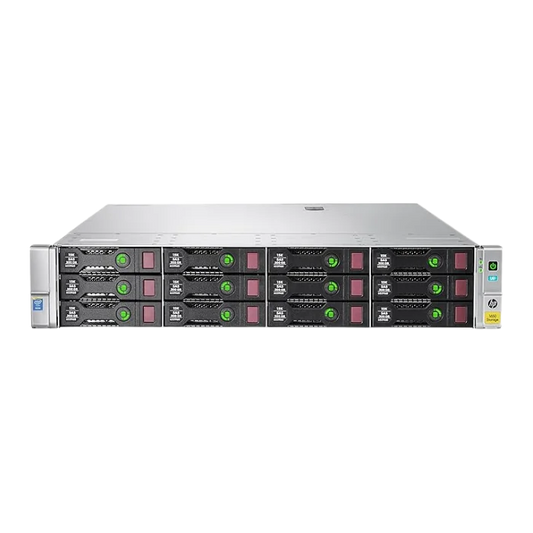
| Dell PowerEdge R740 / R740xd | 2U, up to 24x 2.5" or 12x 3.5" bays | Hyper-converged Proxmox + Ceph clusters and storage-heavy hosts |
| HPE ProLiant DL360 Gen10 | 1U, compact and efficient | Businesses standardized on HPE and iLO management |
| HPE ProLiant DL380 Gen10 | 2U, massive expansion, GPU-capable | Mixed workloads, storage-dense nodes, future GPU experiments |
For ZFS or Ceph, order your server with the controller in HBA/IT mode (Dell HBA330, or HPE Smart Array in HBA mode). Our guides to Dell PERC controllers and HPE Smart Array controllers explain which models support it.
A popular configuration we build for businesses leaving VMware:
That's real high availability, live migration, and software-defined storage for a one-time hardware cost that's often less than a single year of the equivalent VMware subscription. Under VMware's new model, those same 120 cores would each be a recurring line item.

Proxmox includes a built-in ESXi import wizard: add your ESXi host as a source in the Proxmox UI and it pulls VMs across directly — disks, configuration and all. For most VMs the process is:
Migrate in waves: test/dev first, then low-risk production, then critical systems during a planned window. Run both environments in parallel for 2–4 weeks as a safety net before decommissioning ESXi.
Once everything is validated and backed up on the new platform, retire the ESXi hosts — or better, wipe them, install Proxmox, and add them to the cluster as extra capacity. That's the advantage of owning your hardware outright.
A rough comparison for a typical 3-host SMB environment over five years:
| VMware (New Model) | Proxmox on Refurbished | |
|---|---|---|
| Software | Recurring subscription, 72-core minimum, renewal penalties | Free (optional support subscription) |
| Hardware | Often reused, but core count now increases license cost | One-time purchase of refurbished R640s / DL360s |
| Backup | Separate licensing | Proxmox Backup Server included |
| 5-year trend | Rising and unpredictable | Flat, predictable — you own everything |
Most businesses find the entire migration — hardware, setup, and time — pays for itself within the first 12–18 months of avoided subscription fees. Every year after that is pure savings.
The VMware exit wave is not a fad — it's a rational response to a licensing model that no longer fits small and mid-sized businesses. Proxmox VE has matured into a genuine enterprise platform, its ESXi import tooling makes the move far easier than it was even two years ago, and refurbished Dell and HPE servers give you high-core-count, high-RAM hardware without a per-core penalty attached.
The formula: a 3-node cluster of refurbished PowerEdge or ProLiant servers, controllers in HBA mode, enterprise SSDs, 10GbE between nodes, and a phased migration with a parallel-run safety net. In most cases, the whole project costs less than one year of staying put.
At ServerDove Trading & Services, we supply migration-ready refurbished Dell PowerEdge and HPE ProLiant servers in Qatar — configured to your spec with HBA/IT-mode controllers for ZFS and Ceph, ECC memory, enterprise SSDs, and 10GbE networking, backed by local warranty and support. Contact us for a free Proxmox cluster sizing based on your current VMware workload.









"Use enterprise SSDs" is correct advice — and incomplete, because the category spans drives rated for a few...
"Refurbished" describes a process, not a guarantee. A properly refurbished server has been diagnosed, tested and verified component...
Cabling is the one network decision you can't undo — a switch is swapped in an afternoon, but...
A UPS is judged entirely on a day it's never been tested. Two mistakes cause most failures: sizing...


