

Backup Server Build Guide: Hardware for Veeam and Proxmox Backup Server
A backup server isn't a production server with the workload turned down. It has inverted priorities, and Veeam...

Every CCTV project eventually runs into the same problem: where to store all the footage. Cameras are easy to choose, but storage is where most surveillance systems fail — recordings get overwritten too early, drives wear out from continuous writing, or the system slows down when many cameras record at once.
Whether you are securing an office, warehouse, retail store, school, or residential compound, the storage system decides how many days of footage you can keep, how reliable your recordings are, and how much the whole project costs over time.

This guide explains how to calculate CCTV storage requirements, choose the right drives, pick between NVR appliances and server-based storage, and design a system that records reliably 24/7.
CCTV storage is different from normal file storage. Office file servers handle occasional reads and writes, but surveillance storage receives continuous write activity from every camera, every second, all year long. This constant workload affects drive choice, cooling, RAID design, and capacity planning.
Poor storage planning causes common problems:
A well-planned CCTV storage system protects the footage the same way the cameras protect the property.
CCTV storage depends on five factors: number of cameras, resolution, frame rate, compression (H.264 or H.265), and how many days of footage you need to keep (retention period).
A simple formula based on the camera bitrate:
Storage per day (GB) = Bitrate (Mbps) × 10.8 × Number of Cameras
Then multiply by the number of retention days. Add 20–25% headroom for safety.
Typical daily storage per camera at continuous recording:
| Camera Resolution | Typical Bitrate (H.265) | Storage Per Day | 30 Days |
|---|---|---|---|
| 2MP (1080p) | ~2 Mbps | ~22 GB | ~0.65 TB |
| 4MP (2K) | ~4 Mbps | ~43 GB | ~1.3 TB |
| 8MP (4K) | ~8 Mbps | ~86 GB | ~2.6 TB |
Example: 16 cameras at 4MP with 30-day retention need roughly 16 × 1.3 TB = ~21 TB, plus headroom — so plan for around 26–28 TB of usable capacity.
Motion-based recording can reduce these numbers significantly, but for security-critical sites, continuous recording is usually recommended so nothing is missed.
Small installations often use an NVR appliance, but as the camera count grows, server-based storage becomes more practical and cost-effective.
NVR Appliance
Server-Based Storage
There are two common server-based designs: running the VMS software directly on the server with local storage, or using a dedicated storage server (for example, a TrueNAS storage server) as the recording target over iSCSI or SMB.

Drive choice is the most important decision in CCTV storage. Standard desktop drives are not designed for 24/7 continuous writing and often fail early in surveillance systems.
| Drive Type | Examples | Best For |
|---|---|---|
| Surveillance drives | WD Purple, Seagate SkyHawk | Small to medium NVR systems |
| Enterprise SATA/SAS drives | Seagate Exos, WD Ultrastar, Toshiba MG series | Server-based systems with many cameras |
| Desktop drives | Standard consumer HDDs | Not recommended for CCTV |
For server-based CCTV storage with RAID, enterprise drives are the better choice. They are rated for 24/7 workloads, higher annual write volumes, and vibration in multi-drive chassis.
Without RAID, a single drive failure means losing all footage stored on that drive. For surveillance storage, redundancy matters because footage cannot be recreated after it is lost.
Remember that RAID reduces usable capacity. In an 8-drive RAID 6 array, two drives' worth of space goes to parity — plan raw capacity accordingly.
Storage bandwidth is only half the story — the network must carry all camera streams to the storage server without congestion. As a rough guide, 30 cameras at 4 Mbps generate about 120 Mbps of continuous traffic, which fits easily in 1GbE. Larger deployments with 4K cameras or 100+ channels should use 10GbE between the recording servers and the storage.
Here are three reference configurations using refurbished enterprise servers, sized for 30-day continuous recording at 4MP:
| System Size | Cameras | Suggested Server | Storage Layout |
|---|---|---|---|
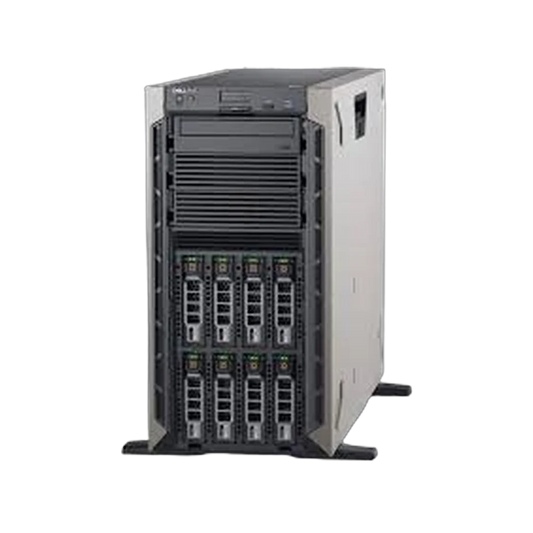
| Small | Up to 16 | Dell PowerEdge T440 / HPE ML350 | 4–6x 8TB enterprise HDD, RAID 5/6 |
| Medium | 16–64 | Dell PowerEdge R730xd / HPE DL380 Gen9 | 8–12x 12TB enterprise HDD, RAID 6 |
| Large | 64–150+ | Dell PowerEdge R740xd / HPE DL380 Gen10 | 12–24x 16TB enterprise HDD, RAID 6 + hot spare, 10GbE |
All three builds include redundant power supplies and remote management (iDRAC/iLO), so drive failures and health alerts can be handled before footage is lost.
CCTV storage is not just about buying big hard drives. A reliable surveillance system needs the right combination of drive type, RAID protection, server hardware, network design, and retention planning. Getting these right from the start prevents lost footage, early drive failures, and expensive redesigns later.
For growing installations, server-based storage on enterprise hardware offers the best balance of capacity, reliability, and cost — especially when built on refurbished Dell PowerEdge or HPE ProLiant servers.
At ServerDove Trading & Services, we supply refurbished and new enterprise servers, surveillance and enterprise hard drives, RAID/HBA cards, and 10GbE networking for CCTV storage projects of any size in Qatar. Contact us for help sizing a storage server for your camera count and retention needs.

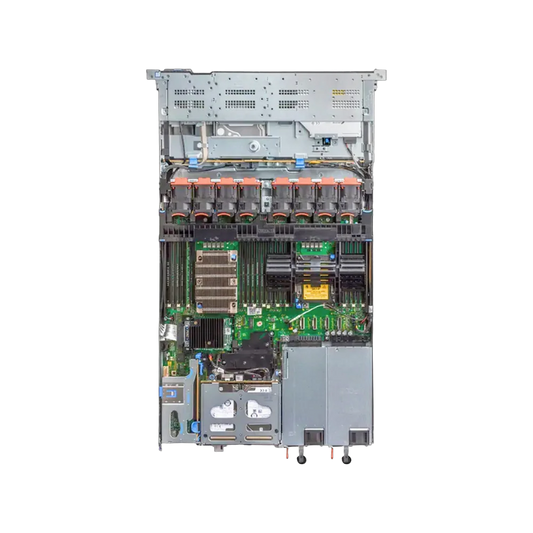


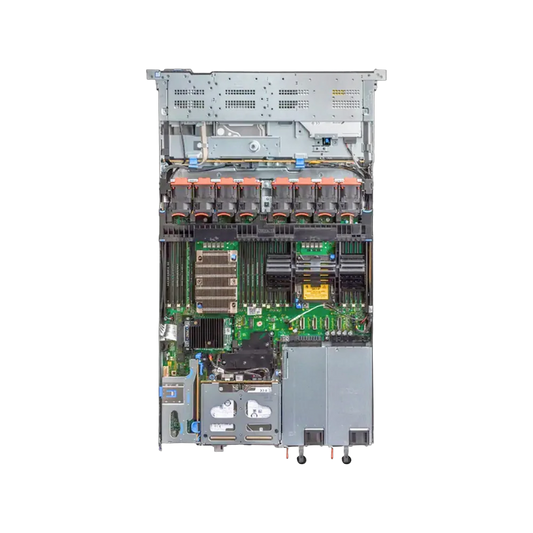


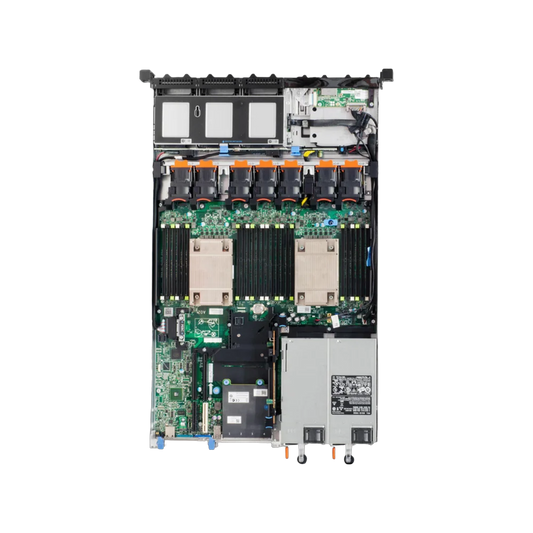




A backup server isn't a production server with the workload turned down. It has inverted priorities, and Veeam...
The question behind every refurbished purchase: how long before it fails? The answer comes from failure data on...
A rack has to outlast everything else in the server room. Buy a shallow one to save money...
"Use enterprise SSDs" is correct advice — and incomplete, because the category spans drives rated for a few...


