

How to Inspect a Refurbished Server Before You Buy: A Practical Checklist
"Refurbished" describes a process, not a guarantee. A properly refurbished server has been diagnosed, tested and verified component...

Across most of our storage guides, Proxmox, TrueNAS, Ceph and ZFS, there's a line that keeps appearing: use enterprise SSDs with power-loss protection. It's correct advice. It's also incomplete, because "enterprise SSD" covers a range from drives rated for a few hundred terabytes of writes to drives rated for tens of thousands, at prices that vary by a similar multiple.
Buyers get this wrong in both directions. Fit a read-intensive drive under a busy database and it wears out in eighteen months. Fit a write-intensive drive under a file server and you've paid three times over for endurance that will never be used. The datasheet numbers (DWPD and TBW) exist precisely to prevent both, once you know how to read them.
This guide explains what those numbers measure, how to work out what your workload actually needs, why power-loss protection is the real dividing line, and how to read wear on a used drive.

Every SSD has a finite wear budget. NAND flash cells survive a limited number of program/erase cycles before they can no longer reliably hold data. Manufacturers express that budget two ways:
TBW, Terabytes Written
The total amount of data the drive is rated to absorb over its warranted life. Think of it as the size of the fuel tank. A drive rated 7,000 TBW can write seven petabytes before the manufacturer considers it worn out.
DWPD, Drive Writes Per Day
How many times the drive's full capacity can be overwritten every day for the length of the warranty. Think of it as the burn rate the tank supports. A 3.84TB drive at 1 DWPD tolerates 3.84TB of writes daily for five years.
They're mechanically linked by one formula:
TBW = Capacity (TB) × DWPD × 365 × Warranty years
A 1.92TB drive rated 1 DWPD over a 5-year warranty: 1.92 × 1 × 365 × 5 ≈ 3,504 TBW. Reverse it to get DWPD from a TBW figure.
Two consequences worth noting. First, a DWPD figure is meaningless without the warranty period. 1 DWPD over three years is a much smaller tank than 1 DWPD over five. Second, DWPD scales with capacity: a 7.68TB drive at 1 DWPD absorbs twice the daily writes of a 3.84TB drive at the same rating. Buying larger drives is one legitimate way to buy more endurance.
Dell, HPE, and the drive manufacturers sort enterprise SSDs into three tiers. The difference is mostly invisible over-provisioned flash (spare cells the controller uses to spread wear), which is why price rises steeply with class.
| Class | Typical DWPD | Suited To |
|---|---|---|
| Read-Intensive (RI) | 0.5 – 1 | File servers, VM boot volumes, content serving, backup targets, most general datastores |
| Mixed-Use (MU) | 3 | Busy virtualisation hosts, transactional databases, VDI, surveillance recording, caching tiers |
| Write-Intensive (WI) | 10+ | Database logs and journals, ZFS SLOG, Ceph journals, heavy ingest, anything where every transaction lands twice |
Most business workloads land in read-intensive territory. A general file server or a lightly loaded VM host writes a small fraction of its capacity daily. Mixed-use is the right call once a database or busy hypervisor is involved. Write-intensive is a specialist tier for log and journal devices, not general storage.
Three steps, and the first one is the only hard part:
Don't guess. On an existing system, read the host write counters over a representative week, SMART attributes on the drive itself, iostat or zpool iostat on Linux, Performance Monitor on Windows, or the storage graphs in Proxmox. Divide by days to get an average, and note the peak.
Divide daily writes by the drive's usable capacity. A server writing 200GB per day to a 1.92TB drive needs 200 ÷ 1,920 ≈ 0.1 DWPD. That's comfortably within read-intensive territory, with headroom to spare.
The host's write volume is not what the flash actually absorbs. Every SSD controller rewrites more than it's asked to. The ratio is called the write amplification factor (WAF). Filesystems add their own on top: ZFS with its copy-on-write and transaction groups, Ceph with its replication and journaling, RAID with parity updates. A WAF of 2–3× is common under these; small random writes push it higher.
Practical rule: take your measured daily writes, multiply by 2–3 for filesystem and controller amplification, then add 30% headroom for growth. If the result still sits under 1 DWPD, read-intensive is fine. If it's approaching 1, step up to mixed-use. The price difference is far smaller than the cost of an early replacement.
Endurance gets the attention, but power-loss protection (PLP) is what actually separates an enterprise SSD from a consumer one for server use. Every SSD holds recently written data in a volatile DRAM cache before committing it to NAND. If power drops before that commit (a PSU failure, a UPS transfer gap, a tripped breaker) a consumer drive loses whatever was in flight, and can corrupt the filesystem in the process.
Enterprise drives carry a bank of capacitors that hold enough charge to flush the cache to NAND after power is lost. The write that the operating system was told had completed actually did complete. That guarantee is what makes an SSD safe to use under a database, a RAID array, or a ZFS pool.
| Feature | Consumer SSD | Enterprise SSD |
|---|---|---|
| Power-loss protection | No | Capacitor-backed cache flush |
| Endurance (per 1TB) | 300 – 600 TBW | 1,750 – 17,500 TBW |
| DWPD | 0.3 – 0.6 | 1 – 10 |
| Sustained write performance | Drops sharply once cache fills | Consistent under continuous load |
| Rated duty cycle | Intermittent | 24 × 7 |
| Interfaces | SATA, NVMe | SATA, SAS (dual-port), NVMe (U.2/U.3) |
This is why a ZFS SLOG or Ceph journal on a consumer SSD is worse than no dedicated device at all. The whole purpose of those devices is to promise the filesystem a write is durable, and a drive without PLP can't keep that promise. Under any workload that holds transactions, PLP is non-negotiable.
Endurance maths is what makes used enterprise flash a rational purchase. Every SSD reports its wear through SMART, the Percentage Used field on NVMe drives, or a wear-levelling / media-wearout indicator on SATA and SAS. It counts down the TBW budget consumed and can't be edited, only reset by replacing the drive.
The arithmetic is often surprising. A mixed-use 3.84TB drive rated 3 DWPD carries roughly 21,000 TBW of budget. At 20% wear it has around 16,800 TBW remaining. That's more remaining endurance than a brand-new read-intensive drive of the same size, at a fraction of the price. Priced like mileage on a car, a lightly worn mixed-use drive is frequently the better value.
NAND flash wears faster when written hot, and stores data less reliably when kept hot. Enterprise SSDs are rated for an operating range of roughly 0–70°C, but that's a survival limit, not an ideal. Sustained operation in the upper part of that range accelerates cell wear and reduces retention margins.
Inside a well-ventilated rack in a conditioned server room this rarely matters. In an unconditioned comms cupboard during a Doha summer (the same environment covered in our cooling guide) drive temperatures can climb well beyond what the endurance rating assumed. NVMe drives, which run hotter than SATA at full load, are the most exposed. Both iDRAC and iLO report per-drive temperatures; if they sit consistently above 50°C, the endurance figure on the datasheet is optimistic for your installation.
| Workload | Typical DWPD Needed | Recommended Class |
|---|---|---|
| OS / boot volume | ≈ 0.1 | Read-Intensive |
| File server, document shares | 0.1 – 0.5 | Read-Intensive |
| Backup / archive target | ≤ 1 | Read-Intensive |
| General VM datastore | 0.3 – 1 | Read-Intensive, MU if busy |
| CCTV / surveillance recording | ≈ 3 | Mixed-Use |
| Transactional database (data files) | 1 – 3 | Mixed-Use |
| Database logs, ZFS SLOG, Ceph journal | 3 – 10+ | Write-Intensive |
| AI inference model storage | ≤ 0.5 | Read-Intensive NVMe (speed matters, writes don't) |
A common and sensible pattern: read-intensive drives for the bulk of storage, plus one or two write-intensive drives for the log or journal device that absorbs the write-heavy traffic. It costs far less than making everything mixed-use and protects the component that actually wears.
They describe the same wear budget from different angles. TBW is the total data a drive can absorb over its warranted life. DWPD is how many full-capacity overwrites per day that budget supports across the warranty period. They convert via TBW = capacity × DWPD × 365 × warranty years, so a DWPD figure only means something alongside the warranty length.
Usually well under 1 DWPD. A typical office file server writes a small fraction of its capacity daily, often 0.1 to 0.5 DWPD once write amplification is included. Read-intensive drives are the appropriate and economical choice.
For a lab or a non-critical boot drive, possibly. For anything holding real data, no. Consumer SSDs lack power-loss protection, so a sudden outage can lose in-flight writes and corrupt the filesystem. They also wear out quickly under sustained server writes and throttle performance once their cache fills.
Yes, when the SMART data is available. Read the percentage-used figure and calculate remaining TBW. A lightly worn mixed-use drive often has more life left than a new read-intensive drive. Verify the model is a genuine enterprise SKU with power-loss protection, and reject any drive showing media or uncorrectable errors.
At the same DWPD rating, yes. A 7.68TB drive at 1 DWPD absorbs twice the daily writes of a 3.84TB drive at 1 DWPD, because the rating scales with capacity. Buying more capacity than you strictly need is a legitimate way to buy more endurance.
ServerDove supplies new and tested used enterprise SAS, SATA, and NVMe SSDs for Dell PowerEdge and HPE ProLiant servers across Qatar, with SMART data disclosed on used drives and delivery in Doha and nationwide.
Two things decide whether an SSD is right for a server. Power-loss protection decides whether it's safe to hold data at all, and that's a yes-or-no question with no middle ground. Endurance class decides whether it will last, and that's a calculation: measure real writes, allow for amplification, pick the tier that leaves headroom.
Most businesses need read-intensive drives with PLP for the bulk of their storage, mixed-use under databases and busy hypervisors, and a single write-intensive device for logs or journals where every transaction lands twice. Get the class right and the drives outlast the server. Get it wrong and they become the first thing to fail.
At ServerDove Trading & Services, we stock enterprise SSDs across all three endurance classes for Dell and HPE servers, with SMART data disclosed on every used drive. Tell us your workload and daily write volume and we'll recommend the right class, with delivery across Qatar and local warranty. Request a Quote · Chat on WhatsApp · Browse SSDs


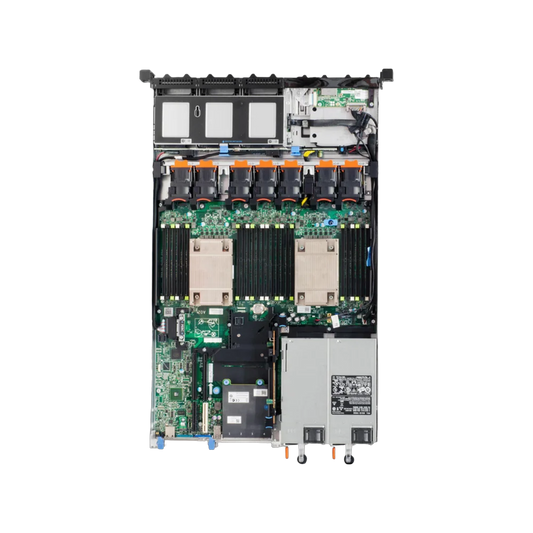

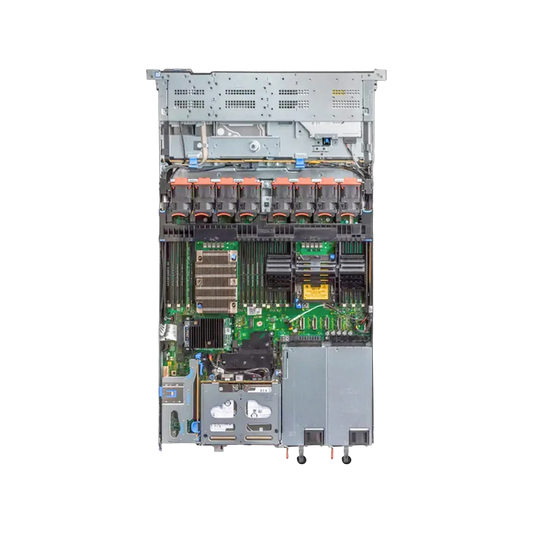

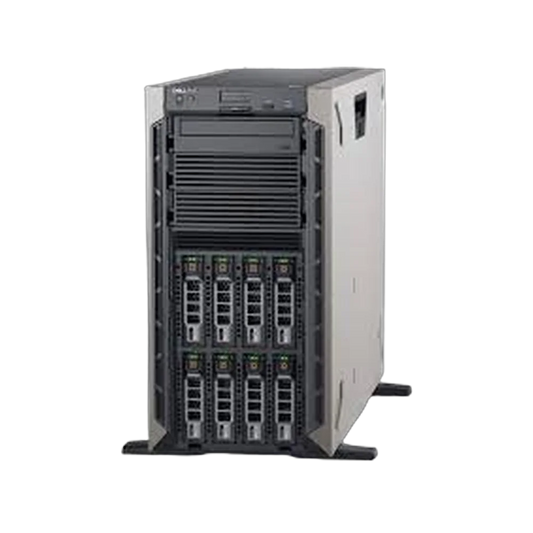





"Refurbished" describes a process, not a guarantee. A properly refurbished server has been diagnosed, tested and verified component...
Cabling is the one network decision you can't undo — a switch is swapped in an afternoon, but...
A UPS is judged entirely on a day it's never been tested. Two mistakes cause most failures: sizing...
Every PowerEdge has iDRAC, every ProLiant has iLO — and the brand matters far less than most buyers...


