

Backup Server Build Guide: Hardware for Veeam and Proxmox Backup Server
A backup server isn't a production server with the workload turned down. It has inverted priorities, and Veeam...

If you've narrowed your search down to HPE, there's a good chance you've hit the same fork every HPE buyer hits: DL360 or DL380? Both are ProLiant workhorses, both share the same generation of Intel Xeon Scalable processors, and both show up constantly on the refurbished market — which makes the choice feel harder than it actually is.
The real answer comes down to one trade-off: rack density versus expansion room. The DL360 is HPE's 1U compact powerhouse — built for environments where every rack unit counts. The DL380 is the 2U all-rounder — built for storage, PCIe expansion, and workloads that need breathing room. Once you know which side of that trade-off your business is on, the model picks itself.
This guide compares both servers across generations, breaks down storage and PCIe differences, and gives concrete recommendations for common business workloads.

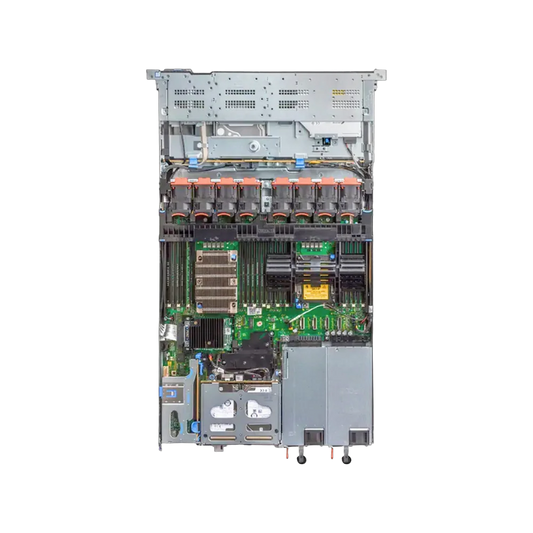
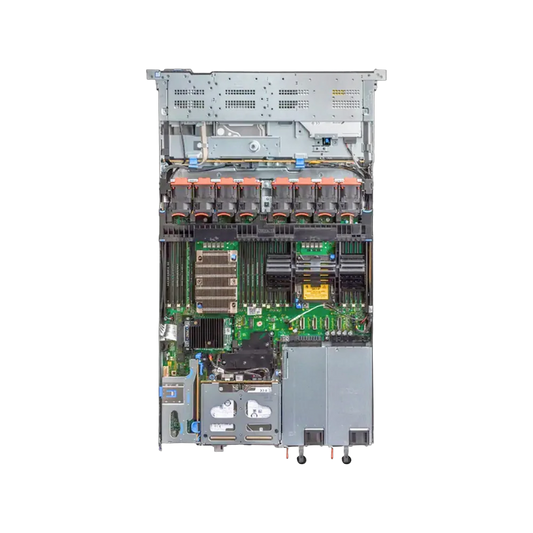
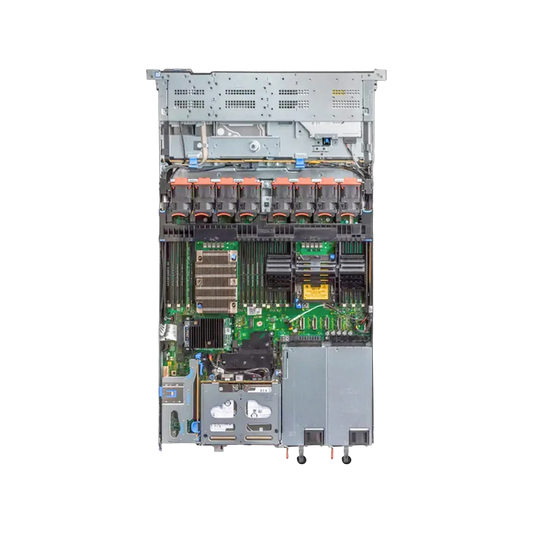
HPE ProLiant DL360 Gen10 — 1U, 8 SFF bays

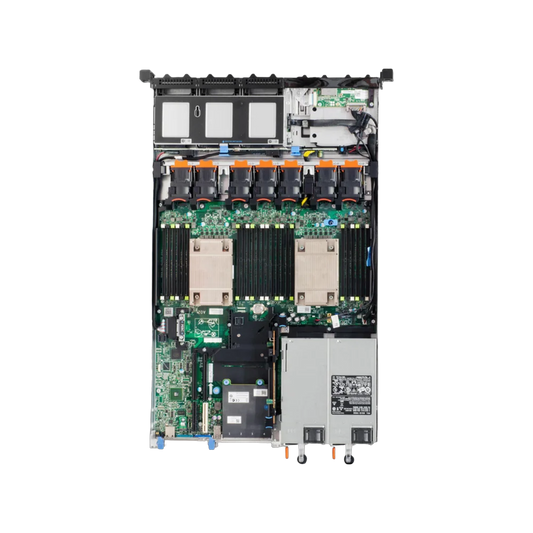
HPE ProLiant DL380 Gen10 — 2U, 16 SFF bays
Strip away the marketing and the two servers share a lot: the same CPU sockets, the same DIMM count, the same iLO management, often the same generation of chipset. The difference that actually matters day to day is the chassis itself.
DL360 — 1U "Compact Powerhouse"
Half the rack space of the DL380. Fits 42 units in a standard rack. Built for high-density deployments where every U is paying rent — colocation, edge sites, dense virtualization clusters.
DL380 — 2U "Expandable King"
Double the rack space, but far more room to grow — more drive bays, more PCIe slots, better airflow. The safer default when you're not sure what you'll need in three years.
Same CPUs, same memory ceiling, same management stack — the DL360 vs DL380 decision is really a decision about storage, expansion, and rack space, not raw compute power.
Using Gen10 as the reference point, since it's the most common generation on the refurbished market right now:
| Spec | DL360 Gen10 | DL380 Gen10 |
|---|---|---|
| Form factor | 1U rack | 2U rack |
| CPU | Dual Intel Xeon Scalable, up to 28 cores/socket | Dual Intel Xeon Scalable, up to 28 cores/socket |
| Memory | 24 DIMM slots, up to 3TB DDR4 | 24 DIMM slots, up to 3TB DDR4 |
| Drive bays | Up to 10 SFF, max ~40TB | Up to 24 SFF / 12 LFF, max ~459TB |
| PCIe slots | Up to 3 (PCIe 3.0) | Up to 8 with secondary riser (PCIe 3.0) |
| GPU support | Single-wide only (e.g. NVIDIA T4) | Up to 3 double-wide GPUs (e.g. A100-class) |
| Power supplies | HPE Flex Slot, 500W–1600W | HPE Flex Slot, 500W–1600W |
| Cooling | Smaller, higher-pressure fans — louder, tighter thermal margin | Larger, more efficient fans — quieter, more headroom |
| Rack density | 42 units per standard rack | 21 units per standard rack |
The headline number worth remembering: the DL380 takes up double the rack space but offers roughly 10x the storage capacity of the DL360 — about 5x the storage per rack unit once you account for the extra space.
If there's one spec that should drive the decision, it's this one. The DL360's compact chassis caps out around 10 SFF drive bays — plenty for a boot volume plus modest local storage, but not built to be a storage node. The DL380 supports up to 24 SFF bays (or 12 LFF for large-capacity drives), plus optional rear and mid-plane drive cages that turn it into genuine bulk storage.
Both support the same drive technologies — SATA, SAS, and NVMe — and the same HPE Smart Array controller family, so the storage ceiling, not the storage technology, is what separates them.
Building a TrueNAS or Ceph storage node? The DL380's bay count makes it the obvious choice — a DL360 simply doesn't have the physical room to be a serious storage server.
Both models ship standard with 3 PCIe slots. That's where the similarity ends: the DL380 can take a second riser to reach 8 total slots, while the DL360's compact chassis has no room for that expansion — 3 slots is the ceiling.
This matters most for GPU workloads. The DL360 can carry a single-wide, lower-power GPU like an NVIDIA T4 — fine for light inference at the edge. The DL380 can house up to three double-wide, power-hungry GPUs, the kind used for serious on-prem AI workloads or render farms. If GPU acceleration is anywhere on your roadmap, that alone should push you toward the DL380.
It's an easy spec to overlook, but it matters if the server won't be sitting in a purpose-built data center. The DL360 packs the same dual-CPU platform into half the volume, so its fans run smaller and at higher pressure — noticeably louder, and with less thermal margin under sustained full load. The DL380's larger chassis allows bigger, more efficient fans that move more air at lower speeds.
For a proper server room this rarely matters. For a comms closet, small office, or anywhere people work nearby, the DL380 is the more forgiving choice.
Both the DL360 and DL380 span several generations on the refurbished market. The generation matters as much as the model when it comes to price-to-performance:
| Generation | CPU / Memory | Best For |
|---|---|---|
| Gen9 | Xeon E5-v3/v4, DDR4-2400 | Tightest budget, light workloads, lab/test environments |
| Gen10 | Xeon Scalable (1st/2nd gen), DDR4-2666, up to 3TB RAM | The refurbished sweet spot — strong performance-per-dollar, still fully supported |
| Gen10 Plus | Xeon Scalable (2nd/3rd gen), PCIe 4.0, up to 4TB RAM per socket | Newest refurbished stock, NVMe-heavy or GPU-heavy builds, best future headroom |
Parts are not cross-generation compatible: Gen10 and Gen9 use different memory speeds, different RAID controllers (P408i vs P440ar), and different power-supply form factors. The only parts that reliably cross generations are 2.5" SAS/SATA drives themselves and add-in PCIe cards like NICs and HBAs — not caddies, not controllers, not power supplies. Confirm the generation before ordering spares.
Rule of thumb: if you're not sure which one you need, choose the DL380. Its extra room for drives and PCIe cards is far more valuable long-term than the rack space it costs — the DL360 is the specialist's choice, not the default.
Not in raw CPU performance — both support the same processors and the same memory ceiling. The difference under sustained heavy load is thermal: the DL360's tighter chassis runs its fans harder to keep the same CPUs cool, so under extreme, continuous 100% workloads it has less thermal margin than the DL380.
Yes, but only a single-wide, lower-power card like an NVIDIA T4 via the optional GPU riser kit. Power-hungry double-wide cards need the DL380's larger chassis and additional PCIe slots.
Some are, within the same generation — 2.5" SAS/SATA drives (the drive itself, not the caddy) and PCIe add-in cards like NICs and HBAs typically cross over. RAID controllers, power supplies, and drive caddies are generally chassis-specific and not interchangeable between models or generations.
Neither is inherently better value — it depends on what you're solving for. A DL360 typically costs less than an equivalent DL380 configuration, but if your workload needs the drive bays or PCIe slots the DL360 doesn't have, that lower price doesn't help; you'd just need to buy a second server sooner.
The DL360 and DL380 aren't competing for the same job — they're specialists for different constraints. The DL360 is the scalpel: precise, dense, and unbeatable when rack space is the scarce resource. The DL380 is the Swiss Army knife: versatile, expandable, and the safer bet whenever you're not entirely sure what the server will need to handle a few years from now.
For most general-purpose business deployments — virtualization, file services, a mix of workloads that will change over time — the DL380 remains the more forgiving choice. Reach for the DL360 specifically when density is the priority: colocation, edge sites, or a cluster where storage and PCIe needs are already well understood and modest.
At ServerDove Trading & Services, we stock refurbished HPE ProLiant DL360 and DL380 servers across Gen9, Gen10, and Gen10 Plus, configured to your CPU, RAM, and storage needs, with local warranty and support in Qatar. Contact us and we'll help match the right chassis to your workload.









A backup server isn't a production server with the workload turned down. It has inverted priorities, and Veeam...
The question behind every refurbished purchase: how long before it fails? The answer comes from failure data on...
A rack has to outlast everything else in the server room. Buy a shallow one to save money...
"Use enterprise SSDs" is correct advice — and incomplete, because the category spans drives rated for a few...


